Fe collar
Bride of AlvarThe Fe collar is a silver device of dark magic made to control Alvar, the Cursed ruler of Underland, and to convert his extraordinary power into Saul’s weapon. It is not merely an ornament or a restraint: whoever possesses its key can command the person wearing it. Because the collar is bound to both Alvar’s body and Saul’s blood, it makes domination physical, portable, and enduring. Its eventual destruction marks the collapse of Saul’s most intimate mechanism of power, while also revealing that freedom from the object does not immediately erase the violence carried through it.
Origin and Construction
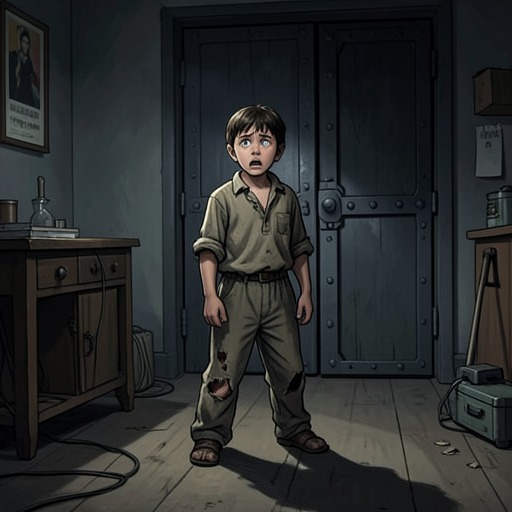
The collar was created when Alvar was still young and desperate for acceptance. After his family rejected him upon discovering that he carried the Curse, Saul presented himself as a possible protector and promised him a future in which he would regain control of his own life. Ysta, a sorceress living beneath the manor house, agreed to forge a silver collar set with rare magical gems. Her stated design was to draw the Curse out of Alvar whenever it attempted to manifest, allowing him to remain in his human form.
Ysta required Alvar’s blood because the collar would not work unless his blood formed part of its creation. The object was therefore made as a personal magical bond rather than a generic weapon. Ysta produced a beautiful silver collar with embedded gems and a key, and Alvar placed the cold metal around his own neck. At first, nothing happened. Saul then instructed him to lock it, claiming that the collar had to recognize itself as bound to him. When Alvar turned the key, the device produced a burning sensation and transformed his understanding of the bargain: the collar did not restore his freedom but made his body subject to Saul’s will.
Saul had secretly added his own blood to the forge before Alvar contributed his. He later explained that this blood connection bound them together and ensured that no one except Saul could remove the collar. The promised cure was thus a ruse designed to make Alvar useful. Saul wanted a weapon capable of killing other Cursed beings, since the proper relics for doing so were believed to have been destroyed. Alvar’s ancient bloodline and his resistance to ordinary fire made him especially valuable to Saul’s plans.
Appearance, Concealment, and Operation
For much of Alvar’s life, the collar remained invisible. Alvar arranged for a noble sylph priestess, Sola Brightfeather, to bless it so that its presence would be cloaked. The concealment allowed him to appear unmarked while carrying a device that defined his daily existence. He describes it as the device of his shame, a hidden reminder that he was enslaved even when no one else could see the proof.
The collar becomes visible when Alvar assumes his Cursed form. During an escape, Lucy Hammond climbs onto his back and sees a silver metal collar at the base of his neck, its red gems embedded in the metal. Alvar warns her to hold onto it because the cloaking is inactive in that form. The object’s change from hidden burden to visible physical fact exposes the contradiction at the center of his public identity: the ruler who appears powerful is also a body controlled from outside itself.
The collar’s operation is demonstrated through forced transformation. After Saul locks it, Alvar discovers that his actions no longer belong to him. He shifts from man to Cursed and back again, not by choice but under the command of the person holding the key. The device can therefore govern both Alvar’s behavior and his physical state. Its power is especially terrifying because it acts through Alvar’s own body, making resistance appear as bodily convulsion, pain, and the loss of human form.
Saul’s Instrument of Power
Saul uses the Fe collar to make Alvar carry out acts that contradict Alvar’s stated reluctance to harm human beings. In one town, Alvar cannot rid himself of the taste of innocent blood after every man except one has been killed. Saul then orders the survivor to spread news of the massacre and announce that submission will spare other villages. The scene turns Alvar’s supernatural violence into political propaganda: Saul’s command produces not only death but also a message intended to establish his rule through terror.
The collar’s coercion does not prevent Alvar from experiencing shame. Instead, it creates the moral injury that shapes his later self-understanding. Alvar remembers being forced to commit acts he would never have chosen, including sexual acts, and says that Saul used and degraded him. He erased those memories from the Mystar so that he would not have to see them again, while retaining other memories of evil deeds as a form of self-punishment for having been naive. The distinction matters: Alvar does not treat the collar as proof that every consequence is irrelevant, but neither does the narrative treat compelled action as simple free choice.
Saul also weaponizes the secrecy surrounding the collar. Alvar tells Lucy Hammond that only he, Fletch, and Sola Brightfeather know the truth. He fears that disclosure will make others see him as a monster, even though he was controlled. The hidden object thus regulates Alvar through anticipated judgment as well as direct command. His shame makes concealment feel necessary, while concealment protects Saul’s authority and allows the public to misunderstand the source of Alvar’s actions.
Public Revelation and Embodied Shame
When Alvar finally addresses the people of Underland, he identifies himself as the monster Saul used to enslave them. He explains that his family cast him out as a young boy, that Saul found him, and that Saul placed the Fe collar around his neck. He defines the collar publicly as a device of dark, evil magic whose wearer is controlled by whoever holds the key. His confession changes the meaning of the violence associated with him without denying that he was the instrument through which Saul killed.
The revelation is dangerous because the collar has allowed Alvar to occupy incompatible positions: victim, weapon, ruler, and alleged monster. By naming the object and explaining its mechanism, he challenges the public story that treated his Cursed form as evidence of innate evil. Yet the confession does not produce universal forgiveness. Some people rise and shout insults, while others remain silent or restrain the angry. The collar’s power persists socially after its physical mechanism has been exposed, because Alvar must still confront the memories and reputational consequences created during his enslavement.
The object also links Alvar’s private history to his political legitimacy. He has hidden his origins because he fears that the people will reject him and abandon his effort to free Underland. His public account is therefore both confession and political risk. By making the Fe collar part of the kingdom’s knowledge, he asks the people to judge the conditions under which he acted rather than only the visible result of those actions.
Destruction and Aftermath
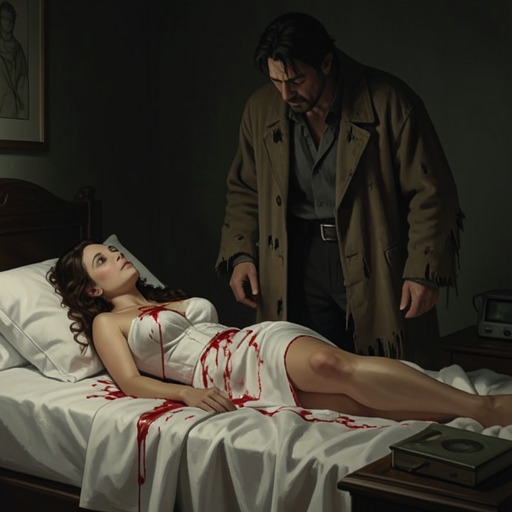
The decisive confrontation occurs when Saul again uses the key against Alvar. While Lucy Hammond is bound, Saul holds the key toward Alvar and orders him to obey. Alvar tries to resist, but his speech becomes confused; he shakes violently, releases Lucy, falls to the floor, and writhes as his body changes form. The collar converts command into visible suffering, showing that Alvar’s apparent monstrosity is being imposed through an external mechanism at the very moment it appears most completely to belong to him.
Lucy seizes Saul’s distraction, takes the key, and breaks the chain by which it hangs around his neck. Remembering the blood exchange that bound Saul and Alvar to the collar, she cuts her own palm with a shard of broken glass and covers the key with her blood. She then commands Alvar to use his fire against Saul. The act turns the collar’s blood-based logic against its maker’s authority: the key is no longer exclusively Saul’s instrument, and Lucy’s blood becomes part of the struggle to break the bond.
After Saul is engulfed in Alvar’s flames, Lucy forces the stolen key into the collar’s lock and turns it. Alvar groans, the collar falls away, and the silver device melts into a pool resembling blood. The flames vanish, and Alvar’s Cursed body contracts back into human form before he collapses. The destruction is both material and symbolic. The object that made his body answerable to Saul no longer exists, but its disappearance is not presented as a clean restoration. Alvar is exhausted, Lucy is dangerously weakened by blood loss, and the history imposed through the collar remains in memory, shame, and bodily consequence.
Significance for Alvar’s Identity
The Fe collar gives visible form to the difference between power and agency. Alvar can possess immense physical strength and still be unable to govern his own actions. His Cursed form may terrify witnesses, but the collar reveals that the real structure of power lies in the key, the blood bond, and the person who controls access to release. Saul’s tyranny is therefore not only a matter of public violence; it is reproduced through the disciplined body of one enslaved person.
The object also sustains a conflict over names and labels. Alvar is called a monster because people see the effects of the Curse, yet he understands himself as someone Saul forced into monstrous acts. His later confession refuses both complete denial and easy self-exoneration. He admits that he was the instrument of Saul’s death-dealing while insisting that he had no choice. In this tension, the collar becomes the material evidence needed to separate imposed behavior from freely chosen intention, even though the evidence cannot undo the suffering caused.
After the collar is destroyed, Alvar still finds it increasingly difficult to remain human. He tells Lucy Hammond that she would make a wonderful queen and urges her to distance herself from him, presenting her as the Fireblood who slew the tyrant and rescued Axus. His words suggest that liberation from Saul’s device has not ended the Curse’s bodily pressure or Alvar’s fear of becoming dangerous. The melted collar removes Saul’s direct command, but it cannot by itself return Alvar to an uncomplicated human identity. Its final significance lies precisely in that incomplete victory: the instrument of enslavement is gone, while the survivor must continue living with what it made possible.